
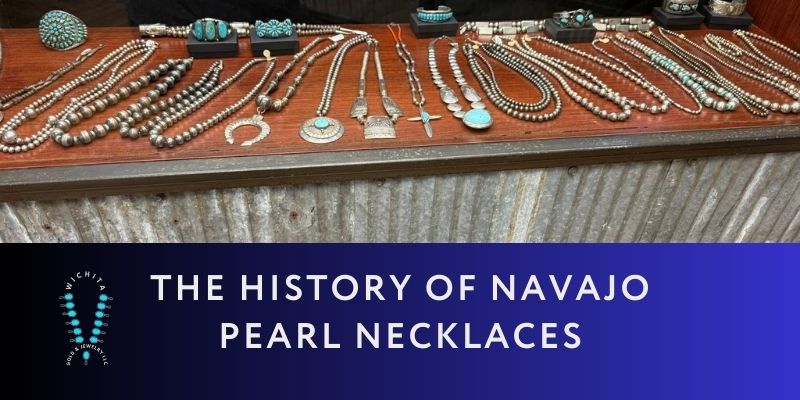
Despite the name, Navajo pearls aren’t pearls at all. They’re hand-made sterling silver beads, traditionally created by Navajo (Diné) silversmiths in the late 19th century. Silversmithing itself came to the Navajo through contact with Mexican silversmiths around the mid-1800s.
Early beads were:
- Hand-hammered from silver coins (often U.S. coins)
- Shaped into domes
- Soldered together to form hollow spheres
This was incredibly labor-intensive and required great skill.
Trade & Status
By the early 1900s, these silver beads became:
- Symbols of wealth and status within Navajo communities
- Valuable trade items used in commerce with other tribes and settlers
- A staple of ceremonial and everyday adornment
Necklaces were often layered—more beads meant more prosperity.
Why they’re called “pearls”
The term “Navajo pearls” came later, largely through traders and collectors, because the beads resembled European pearl strands. The name stuck, even though the craftsmanship and meaning are entirely Indigenous.
Evolution of the craft
Over time:
- Beads became more uniform as tools improved
- Styles expanded to include graduated strands, stamped beads, and oxidized finishes
- Artists began mixing Navajo pearls with turquoise, coral, and shell
Today, many traditional artists still make beads the old way, while others use modern tools—both are respected forms of the art.
Modern significance
Today, Navajo pearl necklaces are:
- A powerful expression of Diné identity
- Worn by men and women
- Seen everywhere from traditional ceremonies to high fashion runways
- Collected as wearable art, with vintage and handmade strands highly prized
They’ve become iconic not because of trend—but because of endurance, craftsmanship, and cultural meaning.
Are you looking for a Navajo pearl necklace to add to your Native American jewelry collection?
Contact us here for available inventory; shipping is available nationwide.