
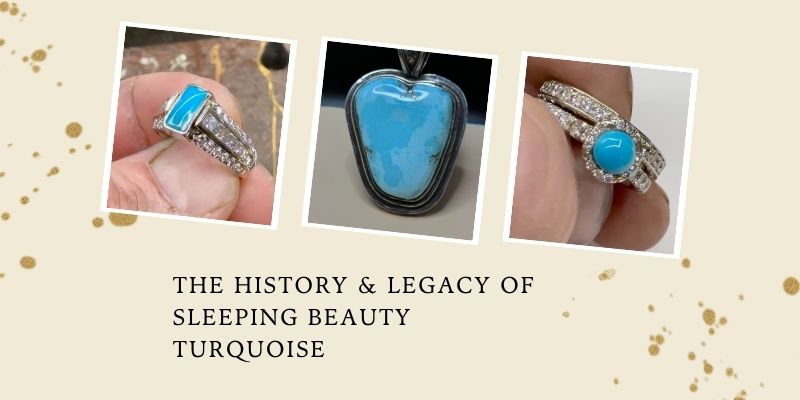
Few gemstones are as instantly recognizable—or as deeply cherished in Native American jewelry—as Sleeping Beauty Turquoise. Known for its pure, sky-blue color and minimal matrix, this stone has become one of the most sought-after varieties of turquoise in the world.
Geological Background
Sleeping Beauty Turquoise formed through natural chemical reactions involving copper, aluminum, and phosphorus over millions of years. What sets it apart is:
- Minimal to no matrix (the dark webbing often seen in other turquoise)
- Bright, uniform blue color
- Smooth, chalk-free appearance
- Ideal hardness for fine jewelry
Because of its clean appearance, it became especially desirable for contemporary and high-end Native American jewelry designs.
Cultural Significance in Native American Jewelry
Turquoise has been used by Native American tribes of the Southwest—including Navajo, Zuni, and Hopi artisans—for centuries. It symbolizes:
- Protection
- Healing
- Strength
- Connection to the sky and water
Sleeping Beauty Turquoise, with its vivid blue tone, became especially popular in the mid-to-late 20th century as jewelry markets expanded. Its consistent color made it perfect for squash blossom necklaces, cuffs, cluster rings, and intricate inlay work.
Mining History
The Sleeping Beauty Mine operated primarily as a copper mine, with turquoise recovered as a byproduct. During the 1970s–1990s, production increased significantly as demand for high-quality turquoise grew.
However, commercial turquoise mining at the Sleeping Beauty Mine largely ceased in the early 2000s. The mine officially closed turquoise operations around 2012, making genuine Sleeping Beauty Turquoise increasingly rare and highly collectible today.
As supply diminished, prices rose—especially for untreated, natural stones.
Why It’s So Highly Valued Today
Collectors and jewelry lovers seek Sleeping Beauty Turquoise because of:
- Its iconic solid blue color
- Its limited availability
- Its association with classic Southwestern jewelry
- Its timeless, elegant appearance
In a world where many turquoise stones are stabilized or heavily treated, natural Sleeping Beauty stones—especially older pieces—hold significant value.
A Timeless Stone
Sleeping Beauty Turquoise isn’t just a gemstone—it’s a piece of Southwestern history. From its Arizona roots to its place in Native American artistry, it represents heritage, craftsmanship, and natural beauty.
Whether set in a bold squash blossom necklace or a delicate silver ring, this legendary turquoise continues to captivate collectors and jewelry enthusiasts alike.