
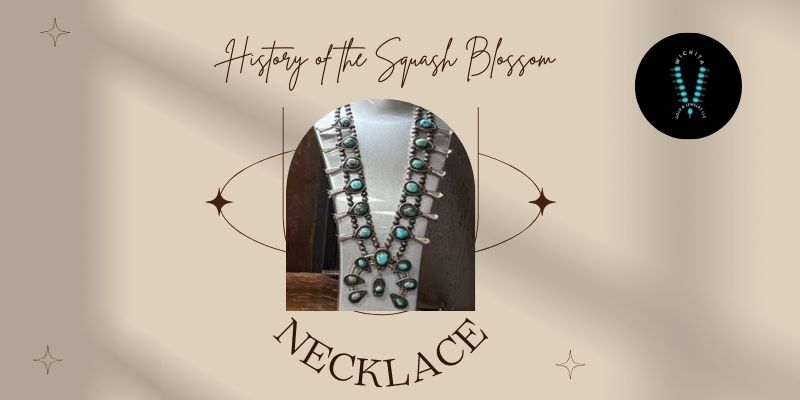
The squash blossom necklace is one of the most recognizable and iconic pieces of Native American jewelry, admired for its bold beauty, cultural depth, and enduring craftsmanship. While today it is often associated with Southwestern style and statement fashion, the roots of the squash blossom necklace tell a much richer story—one shaped by trade, adaptation, and Native artistry.
Origins Influenced by Trade
Contrary to popular belief, the squash blossom necklace did not exist in its current form prior to European contact. Its origins can be traced to the 18th and 19th centuries, when Spanish silversmithing techniques and decorative motifs were introduced to Native peoples of the Southwest through trade.
The crescent-shaped pendant at the center of the necklace, known as the naja, was inspired by Spanish and Moorish designs often used on horse bridles. Native silversmiths adopted this symbol and reinterpreted it through their own cultural lens, transforming it into a powerful centerpiece of jewelry.
Adoption by the Navajo Nation
The squash blossom necklace became especially significant among the Navajo (Diné) people in the late 1800s. Navajo silversmiths—who initially learned metalworking from Mexican craftsmen—began creating necklaces featuring silver beads, floral-shaped elements (the “squash blossoms”), and the naja pendant.
The “squash blossom” itself is believed to be inspired by the shape of a squash or pumpkin flower, a plant deeply connected to agriculture and life in the Southwest. Over time, these designs evolved into larger, more elaborate necklaces that symbolized wealth, status, and artistry.
Cultural Meaning and Symbolism
While meanings can vary between artists and families, squash blossom necklaces have traditionally represented prosperity, protection, and beauty. They were often worn during ceremonies, celebrations, and important gatherings, and sometimes passed down through generations as heirlooms.
Importantly, these necklaces were not originally made for tourism or fashion markets—they were created for Native people, by Native artists, as expressions of identity and skill.
Beyond the Navajo
Although the squash blossom necklace is most commonly associated with the Navajo, other Southwestern tribes, including the Pueblo peoples, also adopted and adapted similar silversmithing styles. Each artist brought their own techniques, symbolism, and regional influences, contributing to the diversity seen in authentic Native American jewelry today.
From Tradition to Timeless Style
In the 20th century, squash blossom necklaces gained wider recognition beyond Native communities, becoming highly sought after by collectors, museums, and fashion enthusiasts. Today, they are worn by people of all backgrounds—but remain deeply rooted in Native tradition.
Authentic squash blossom necklaces continue to be handcrafted by Native American artists, preserving techniques passed down through generations while also embracing modern interpretations.
Honoring the Craft
Understanding the history of the squash blossom necklace adds depth to its beauty. It is not just a statement piece—it is a symbol of resilience, cultural exchange, and artistic excellence. When purchased from Native artisans, these necklaces help support living traditions and honor the stories embedded in every handmade detail.
Would you like to order a Squash Blossom Necklace? Fill out the contact form below for inventory and shipping information.